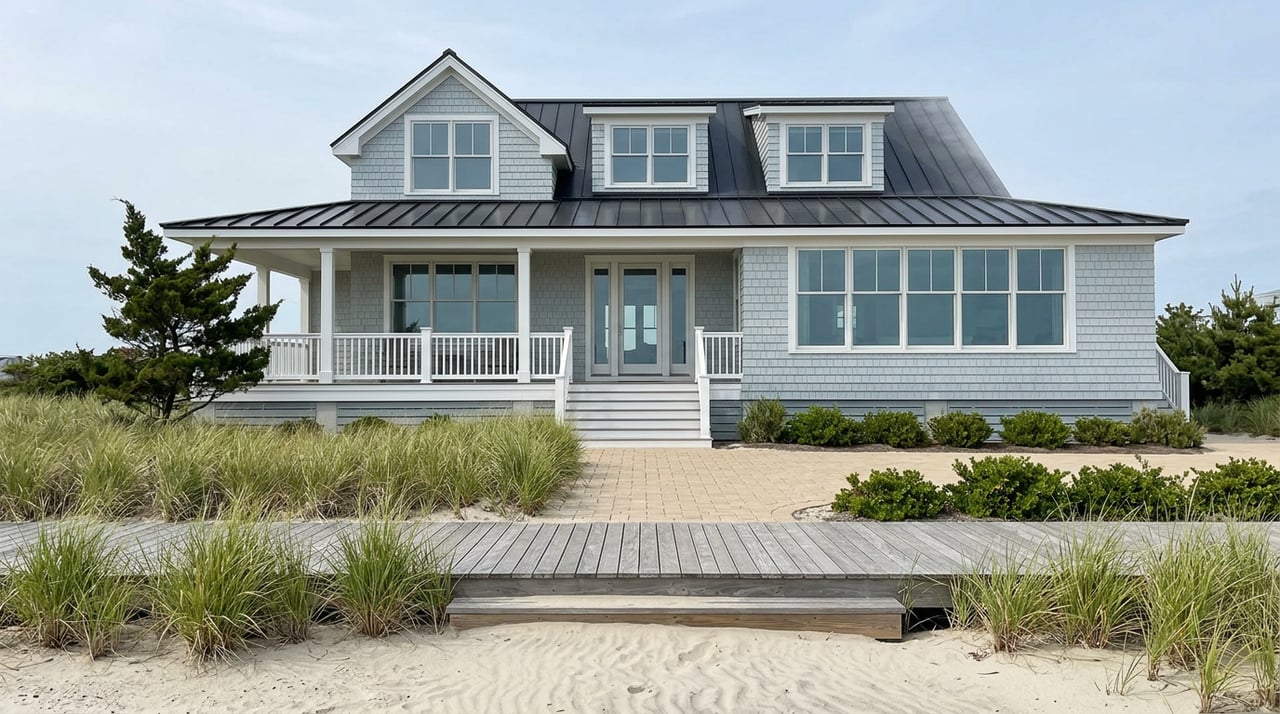
Strathmere's Lifeguards Had No Headquarters This Summer. The Beach Came Back Anyway.
September 24, 2026
September 24, 2026
Where do lifeguards keep their radios, their surf chairs, and their first aid kits when the building that housed all of it gets torn down in March, five weeks before the season starts?
In Strathmere this year, the answer was a stranger's living room.
That detail is easy to miss if you only follow the beach replenishment headlines, which mostly focused on sand volumes and completion dates. But the two stories are the same story. The erosion that forced Upper Township to demolish its Beach Patrol headquarters on Williams Avenue is the same erosion the Army Corps of Engineers spent this summer pumping sand to fix. Understanding how close those two threads ran to each other tells you more about how this island actually functions than any single number does on its own.
The Williams Avenue headquarters had been losing ground for a while. The October 2025 nor'easter that prompted Upper Township to declare a state of emergency stripped a full block of dune from the north end of Strathmere, exposing the rocks and old wooden bulkhead that had been buried under sand for years. By March 2026, the erosion had worked its way under the lifeguard building itself. Township officials determined the structure was no longer safe, and that the cost of shoring it up would have exceeded what the building was worth. It came down in late March.
That left the Beach Patrol without a home heading into a season that was about to get busy. Strathmere doesn't charge for beach access and doesn't require tags, which means the town's lifeguards cover the same stretch of oceanfront as towns that do, without the badge revenue those towns use to fund their operations. A missing headquarters wasn't a minor inconvenience. It was a staffing and safety problem with no obvious fix on the timeline the calendar demanded.
The fix came from a beachfront property owner. Samuel James Worthington had bought a 105 year old house on Whittier Avenue in January for $2.6 million, with plans to eventually tear it down and build something new. Rather than let the lot sit empty before demolition, he offered the house to the township as a temporary headquarters for the season. Upper Township Committee approved the arrangement on April 13.
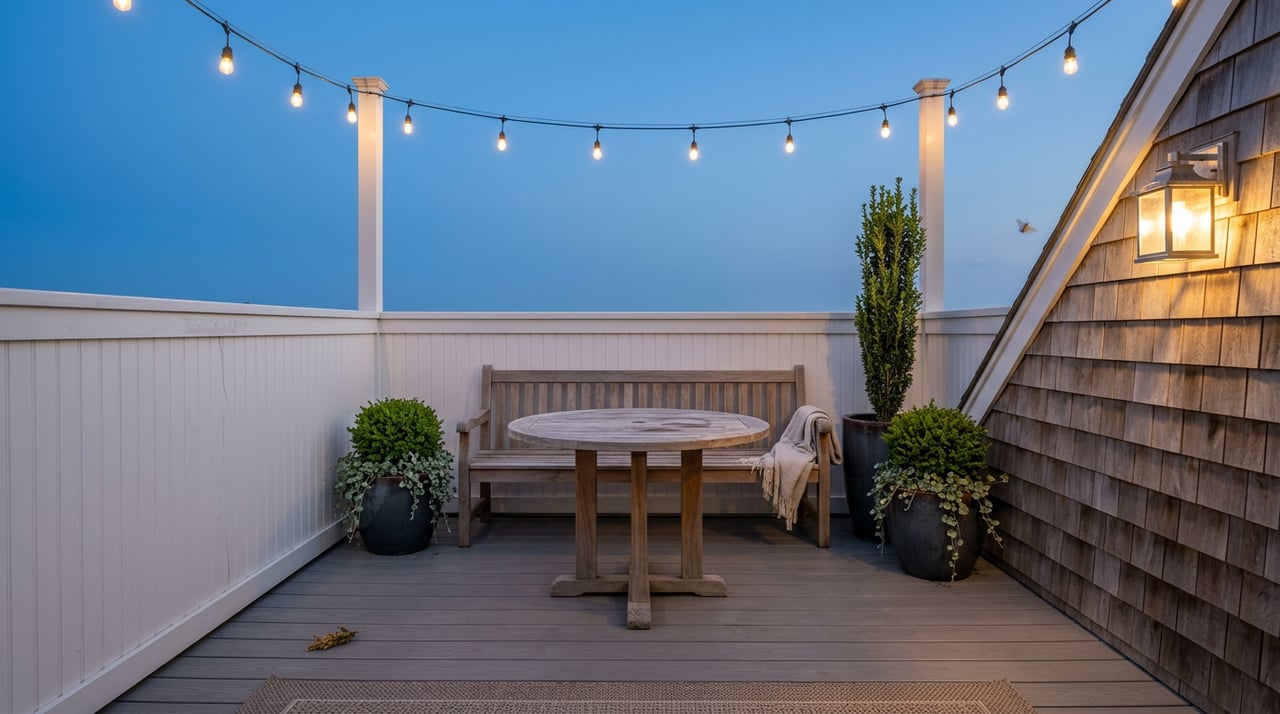
By most accounts it was an upgrade. The donated house came with an outdoor shower and an outdoor bathroom, a step up from the portable toilets the Beach Patrol had been using, along with a second floor deck that gave staff a clear line of sight to the water. Mayor Curtis Corson called it a welcome solution given how little time the township had to solve the problem before summer. It was also explicitly temporary. Worthington still plans to demolish the house for new construction, which means next year's headquarters location remains an open question the township has not yet answered.
While the Beach Patrol settled into its borrowed house, the larger fix was moving through the federal pipeline. On April 6, Congressman Jeff Van Drew announced that southern New Jersey would receive $99 million from the Army Corps of Engineers for beach work spanning Ocean City, Strathmere, Sea Isle City, Avalon, and Stone Harbor. Strathmere and Sea Isle City's share came out of a $28 million portion of that funding, and on April 30 the Army Corps awarded a $21.6 million contract to Norfolk Dredging of Chesapeake, Virginia, to do the work.
Here's the rough sequence of how the year unfolded:
| Date | What happened |
|---|---|
| Oct 11-13, 2025 | Nor'easter strips a block of dune from north Strathmere, prompting a state of emergency |
| March 2026 | Township demolishes the unsafe Williams Avenue lifeguard headquarters |
| April 13, 2026 | Township accepts a donated Whittier Avenue house as temporary Beach Patrol HQ |
| April 30, 2026 | Army Corps awards a $21.6 million contract to Norfolk Dredging |
| July 15, 2026 | Sand pumping begins in Strathmere, starting at Williams Avenue |
| Aug 23-25, 2026 | Project wraps, roughly three weeks ahead of the original schedule |
The work followed a defined path once it reached Strathmere. Crews started at Williams Avenue and pushed north toward Sea Cliff and Seaview, then pivoted south to rebuild Willard and Whittier before finishing near the Jasper Avenue street end. Early progress was slow by design. By July 21, crews had placed roughly 132,000 cubic yards of sand at Williams Avenue without yet filling a full block, which gives a sense of how much material a project like this actually requires before the difference becomes visible on the ground. More than a million cubic yards went into Strathmere's beaches by the time the work was done.
Corson offered a useful way to measure the result. He said the replenished beach would be as wide as it was after the town's original beach fill project roughly twenty years ago. For anyone who has watched the shoreline shrink block by block since then, that comparison means more than a raw cubic yard figure ever could.
The project wrapping up ahead of schedule is genuinely good news, but it comes with a catch worth understanding if you're planning your fall walks or fishing trips. Even after the dredging finished, the Army Corps retained custody of the beach. That means Upper Township can't unilaterally decide to reopen a stretch of sand the day the equipment leaves. Paths open only as the Corps clears them for public use, on a timeline the township doesn't fully control.
Corson had been blunt about this all summer, telling residents who kept climbing over closed sections that the risk was real.
"Closed means closed," Corson said.
That single line captures something true about how these projects work on a barrier island this size. The federal government pays for and directs the fix, and the town's job is mostly to manage the disruption and communicate the timeline as it shifts, which it did more than once this year as the completion date moved from a September 7-13 window to late August.
There's a pattern here that extends beyond the Beach Patrol. Strathmere's marquee restaurant, the Deauville Inn, spent five years trying to operate year round before deciding this past January to go back to a seasonal schedule, closing on January 26 and reopening in April. The reasoning the ownership gave was straightforward: a barrier island with a small winter population doesn't generate enough traffic to justify keeping a full restaurant open through the coldest months.
The Beach Patrol's year told a version of the same story from the other direction. A town this small doesn't carry a spare lifeguard headquarters in reserve, and it doesn't have a standing plan for what happens when erosion outruns the maintenance budget. What it has is a mayor willing to ask a property owner for a favor, and a federal contract that arrived just in time to matter. Both solutions worked this year. Neither one is permanent, and everyone involved in the beach project has said as much. Corson has been pushing for a longer-term hard structure near Corsons Inlet, though the state Department of Environmental Protection has so far shown no interest in the offshore barrier concept the township floated after Hurricane Erin.
The beach is wider than it's been in years, the lifeguards had a working headquarters through the end of the season, and the questions about next summer are still open. If you live here, that's the version of the story worth knowing, not the press release about federal dollars, but the actual sequence of decisions that got a small island through a hard year.
If you're weighing what any of this means for a home you own or are thinking about buying on Seven Mile Island or along the rest of the Jersey Cape, Teresa Campama can walk you through how local conditions like these factor into timing, presentation, and value. Get a Free Home Valuation to start the conversation.
Stay up to date on the latest real estate trends.



Get assistance in determining current property value, crafting a competitive offer, writing and negotiating a contract, and much more. Contact me today.